How to choose an electronic signature platform for Swiss SMEs

The solution for signing in Switzerland and the EU
For a Swiss SME that regularly signs contracts with partners in the European Union, the ideal electronic signature platform should comply with both the Swiss ZertES legislation and the European eIDAS Regulation, provide high security standards, integrate easily with business tools, and offer a flexible pricing model. DeepSign meets all these requirements, enabling companies to manage documents intended for both the Swiss and European markets through a single platform.
Business relationships between Switzerland and the European Union are part of everyday operations for many SMEs. Customers, suppliers and international business partners expect signing processes that are fast, secure and compliant with the legal requirements that apply in different jurisdictions.
Choosing the right platform therefore means more than simply digitising the signature process. It also means adopting a solution that can support the company’s growth, streamline workflows, and ensure the legal validity of documents.
What the ideal platform should offer
If your business regularly signs contracts with partners in the European Union, an electronic signature platform should provide:
- compliance with both ZertES and eIDAS;
- high security standards;
- a simple signing experience for all signatories;
- integrations with the business tools you already use;
- a flexible pricing model.
DeepSign combines all of these features in a single solution, enabling Swiss SMEs to manage documents for both the domestic and European markets.
What to look for in an electronic signature platform
When comparing the different solutions available on the market, it is important to look beyond the basic features.
A good electronic signature platform should first and foremost ensure compliance with the relevant legal requirements, protect documents and provide a straightforward experience for both those sending and those receiving signature requests.
Ease of adoption is another important factor. An intuitive interface enables employees to start using the platform quickly without extensive training, while a simple signing process helps reduce document approval times.
It is equally important that the platform integrates with the tools already used across the business. Automating document workflows helps reduce manual tasks, minimise errors and improve the efficiency of administrative and commercial processes.
Finally, the pricing model should reflect the actual needs of the business, avoiding high fixed costs when signing volumes fluctuate throughout the year.
Why is it important for a platform to support both ZertES and eIDAS?
For Swiss businesses working with partners in the European Union, regulatory compliance is one of the most important considerations when choosing an electronic signature platform.
In Switzerland, the legal validity of electronic signatures is governed by the ZertES legislation, while within the European Union the eIDAS Regulation applies.
A platform that complies with both standards enables organisations to use a single solution to manage documents intended for both the Swiss and European markets, simplifying processes and reducing operational complexity.
DeepSign supports electronic signatures that comply with both ZertES and eIDAS, enabling businesses to sign contracts and other documents with high security standards and full legal compliance.
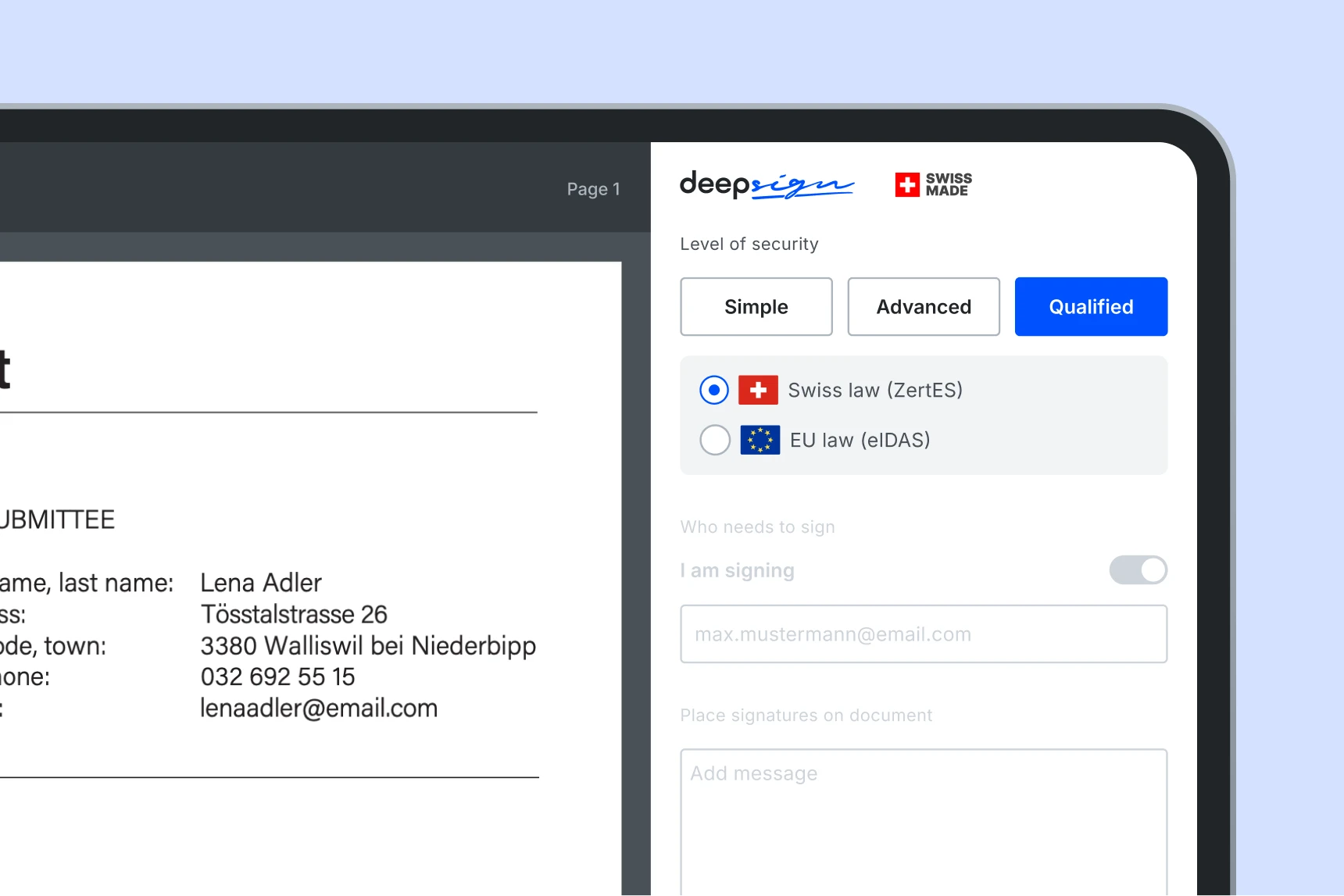
If you would like to learn more about which electronic signatures are legally recognised in Switzerland, you can also read our article Which digital signature solutions are legally recognised in Switzerland and easy to use?
Integrations help simplify processes
Electronic signatures deliver their greatest value when they integrate with the tools your business already uses.
Connecting the platform to document management systems, cloud applications or other business software makes it possible to automate many routine tasks, reduce manual steps and speed up document management.
DeepSign offers a range of ready-to-use integrations designed to fit seamlessly into existing business workflows.
Discover all available integrations in our article DeepSign integrations for smoother processes.
A flexible pricing model is an advantage for SMEs
Not every business signs the same number of documents each month. That is why it is important to choose a platform that allows costs to reflect actual usage.
DeepSign offers a pay-per-use model, allowing businesses to pay only for the signatures they actually use. For organisations with more regular signing requirements, signature bundles are also available at even more favourable rates with a paid DeepCloud subscription.
This approach enables SMEs to get started with a modest investment and gradually increase their signing volume as the business grows.
For more information, visit our DeepSign pricing page.
If you would like to explore why electronic signatures are an investment rather than simply a cost, read our article Why digital signatures worth it for businesses, which explains the main financial benefits of digitising signing processes.
How DeepSign meets the needs of Swiss SMEs
For Swiss businesses that work regularly with partners in the European Union, DeepSign brings together all the essential features required for simple, compliant document management within a single platform.
It supports electronic signatures that comply with both ZertES and eIDAS, allowing organisations to use one solution for contracts intended for both the Swiss and European markets.
The platform is designed to be easy to adopt, offers integrations with the most widely used business tools and provides a flexible pricing model suitable for businesses that sign documents only occasionally as well as those with higher signing volumes.
This enables organisations to digitise their signing processes without increasing operational complexity, while maintaining high security standards, full legal compliance and effective cost control.
Summary
When choosing an electronic signature platform, Swiss SMEs should consider several key factors: compliance with both ZertES and eIDAS, ease of use, security, available integrations and a pricing model that matches their business needs.
DeepSign combines all of these features in a single solution, making it easy to manage contracts for both the Swiss and European markets securely and in full compliance with applicable regulations.
Frequently asked questions
Can a Swiss SME use the same platform to sign contracts in Switzerland and the European Union?
Yes. A platform that complies with both ZertES and eIDAS enables organisations to manage documents for both markets using a single solution.
Does DeepSign support both ZertES and eIDAS?
Yes. DeepSign enables businesses to use electronic signatures that comply with both the Swiss ZertES legislation and the European eIDAS Regulation.
Is a subscription required?
No. DeepSign offers a pay-per-use option, making it ideal for businesses that want to pay only for the signatures they actually use. Signature bundles at even more favourable rates are also available for customers with a paid DeepCloud subscription. Full details are available on the DeepSign pricing page.
Can DeepSign be integrated with other business tools?
Yes. DeepSign integrates with tools such as Microsoft Word, SharePoint andGoogle Drive, making document management simpler and reducing manual work. You can discover all available integrations on the DeepSign integrations page.